
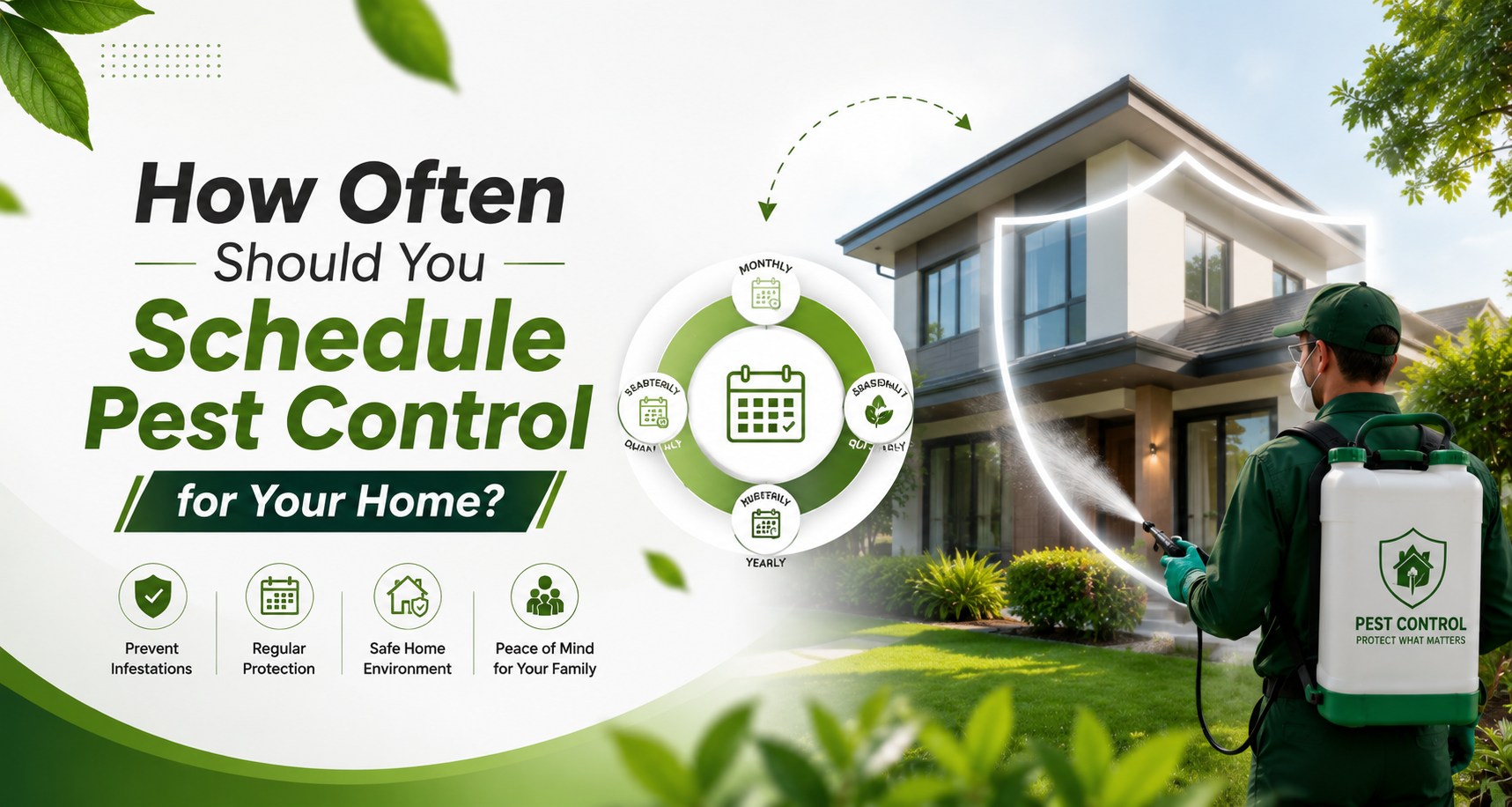
Many homeowners wait until they see cockroaches, ants, termites, or rodents before calling a pest control company. While this approach may solve an immediate problem, it often allows pests to establish colonies and cause damage before treatment begins. The truth is that Pest Control works best as a preventive measure rather than a reactive one.
Regular pest control treatments help protect your family, maintain a hygienic living environment, and prevent costly infestations. However, one of the most common questions homeowners ask is: How often should pest control be scheduled? The answer depends on several factors, including the type of property, location, climate, and pest activity in the area.
Index
- Why Regular Pest Control Matters
- Recommended Pest Control Frequency
- Seasonal Pest Control Requirements
- Signs Your Home Needs Immediate Pest Control
- How Often Should Termite Inspections Be Done?
- Benefits of Scheduled Pest Control Services
- Conclusion
Why Regular Pest Control Matters
Pests rarely appear overnight. Most infestations develop gradually as pests find access to food, water, and shelter inside a property. By the time homeowners notice visible signs, the infestation may already be well established.
Routine Pest Control helps prevent pests from multiplying and reduces the likelihood of serious infestations. Regular treatments also protect furniture, electrical wiring, food storage areas, and structural components of the home.
Recommended Pest Control Frequency
For most residential properties, professional Pest Control treatments every three to four months are generally recommended. This schedule helps maintain a protective barrier against common household pests and allows technicians to identify potential issues before they become severe.
The ideal frequency may vary based on the specific needs of the property.
Quarterly Pest Control
Quarterly treatments are suitable for most homes and provide year-round protection against common pests such as cockroaches, ants, spiders, and rodents.
Bi-Monthly Pest Control
Homes located near gardens, water bodies, construction sites, or areas with high pest activity may benefit from treatments every two months.
Monthly Pest Control
Properties with recurring pest problems or commercial-grade hygiene requirements may require monthly inspections and treatments to maintain effective control.
Annual Preventive Treatments
Even if no pest activity is visible, at least one comprehensive Pest Control inspection should be conducted annually to identify hidden risks and emerging infestations.
Seasonal Pest Control Requirements
Different pests become more active during specific seasons, making seasonal treatments particularly valuable.
Summer
Warm temperatures increase activity among cockroaches, ants, and mosquitoes. Preventive Pest Control before peak summer months can help reduce infestations.
Monsoon
Rainy weather creates ideal conditions for mosquitoes, termites, and rodents. Additional inspections during monsoon season can help address moisture-related pest problems.
Winter
Some pests seek shelter indoors during colder months. Regular inspections help prevent rodents and insects from establishing nests inside the home.
Signs Your Home Needs Immediate Pest Control
Even if you follow a regular treatment schedule, certain warning signs indicate that professional attention may be needed sooner.
- Frequent cockroach sightings
- Ant trails inside the house
- Rodent droppings or scratching sounds
- Visible termite damage
- Mosquito breeding around the property
- Unusual odors associated with pests
- Damaged food packaging
If any of these signs are present, immediate Pest Control intervention can help prevent further infestation.
How Often Should Termite Inspections Be Done?
Termites can remain hidden for months or even years while causing significant structural damage. Unlike many other pests, termite activity is not always obvious.
Experts generally recommend a professional termite inspection at least once every year. Homes with previous termite issues or properties located in termite-prone areas may require more frequent inspections.
Regular termite monitoring is an important part of a comprehensive Pest Control strategy.
Benefits of Scheduled Pest Control Services
Scheduling regular Pest Control services offers several advantages:
- Early detection of infestations
- Long-term prevention of pest problems
- Reduced health risks for family members
- Protection of furniture and property
- Lower repair and treatment costs over time
- Peace of mind throughout the year
Professional technicians can also customize treatment schedules based on your home’s specific requirements and local pest conditions.
For reliable residential pest management solutions, you can explore professional pest control services that provide customized treatment plans for homes.
You can also read our guide on safe pest control solutions for homes with kids and pets to learn how modern pest management prioritizes both safety and effectiveness.
Conclusion
There is no one-size-fits-all answer to how often Pest Control should be scheduled, but most homes benefit from treatments every three to four months. Factors such as location, weather conditions, surrounding environment, and previous pest activity can influence the ideal schedule.
Regular inspections and preventive treatments are far more effective than waiting for an infestation to occur. By partnering with a professional pest control provider and maintaining a consistent treatment schedule, homeowners can enjoy a cleaner, healthier, and pest-free living environment throughout the year.