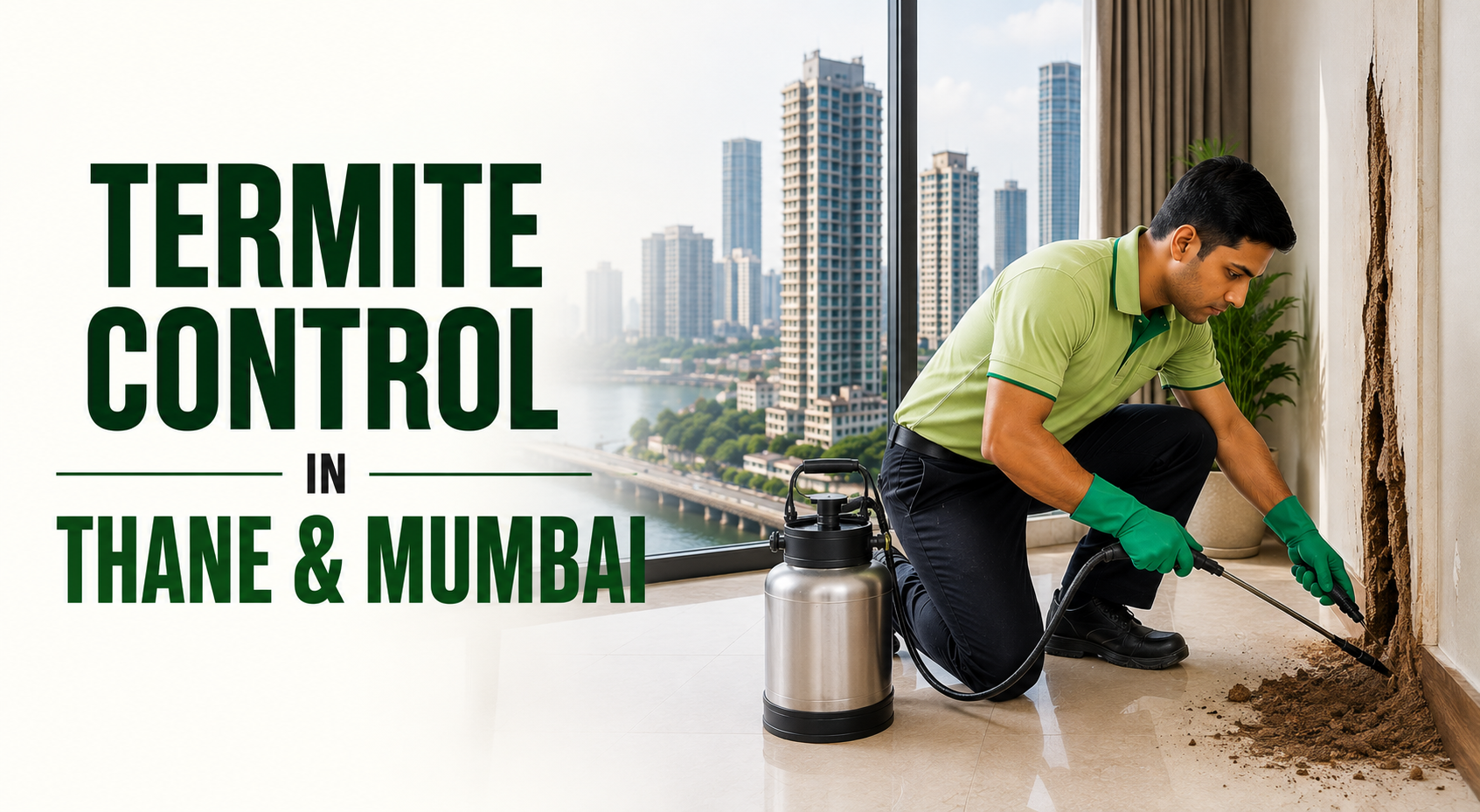
Termites can stay hidden for months while slowly damaging wooden doors, cupboards, flooring, furniture, and other parts of a property. By the time you notice hollow wood, mud tubes, or damaged surfaces, the infestation may already have spread.
In Thane and Mumbai, moisture, warm weather, construction activity, and damp areas around buildings can create conditions where termite activity becomes a serious concern.
Professional termite control in Thane & Mumbai starts with finding the source of the infestation and checking how far the termites have spread. The treatment then depends on the type of property and the level of termite activity.
Why termite control is important in Thane and Mumbai
Termites feed on cellulose based materials, with wood being a common food source around homes and commercial properties.
They can move through cracks, soil, wall spaces, foundations, and other hidden areas. This makes them difficult to spot during the early stages.
Homes and apartments can develop termite activity around wooden door frames, cupboards, skirting, flooring, and furniture. Commercial properties may have additional risk around wooden partitions, storage areas, furniture, and building foundations.
Early inspection can help identify termite activity before the damage becomes extensive.
Common signs of termite infestation
Termites don’t always leave obvious signs. You may notice small changes in wood or surfaces before seeing the insects themselves.
Look for:
- Hollow sounding wooden surfaces
- Small holes in wooden furniture
- Mud tubes along walls or foundations
- Damaged door and window frames
- Bubbling or peeling wooden surfaces
- Loose or damaged flooring
- Discarded termite wings near windows and doors
- Wood that feels weak when pressed or tapped
If you notice several of these signs, arrange an inspection rather than waiting for visible damage to increase.
Termite control for homes and apartments
Termites can affect individual homes as well as apartments in housing societies.
Inside a home, common areas to check include wooden cupboards, beds, wardrobes, door frames, window frames, skirting, flooring, and storage spaces.
Moisture can make some areas more suitable for termite activity. Leaking pipes, damp walls, poorly ventilated storage spaces, and water accumulation near the building can therefore deserve attention.
In apartments, termites can sometimes move through areas connected to other parts of the building. Common walls, service ducts, plumbing spaces, and wooden structures may need to be considered during an inspection.
Termite control for commercial properties
Offices, hotels, restaurants, retail stores, warehouses, schools, and other commercial buildings can also face termite problems.
Wooden furniture, partitions, storage units, doors, flooring, and other wood based materials can provide feeding areas.
Warehouses and commercial buildings may also have storage materials that remain undisturbed for long periods. These areas should be checked regularly when termite activity has previously been reported.
For businesses, treatment planning should consider working hours, access to affected areas, and the need to keep regular operations running.
Why monsoon can increase termite concerns
The monsoon brings more moisture around buildings in Thane and Mumbai.
Water can collect near foundations, walls, gardens, construction areas, basements, and drainage points. Damp conditions can make properties more suitable for termite activity.
Wood that remains damp for long periods can also become more vulnerable.
This is why checking for termite signs before and during the monsoon season can be useful, especially in properties with previous termite activity.
Areas where termites commonly appear
A termite inspection should cover more than the furniture where damage was first noticed.
Common areas include:
- Wooden doors and frames
- Window frames
- Wardrobes and cupboards
- Wooden flooring
- Skirting
- Beds and other wooden furniture
- Wall cracks
- Basements
- Storage rooms
- Areas close to plumbing
- Building foundations
- Wooden partitions
- Damp or poorly ventilated areas
The exact inspection points depend on the construction and layout of the property.
How termite treatment works
Termite treatment starts with an inspection of the property.
The technician checks visible signs, affected wooden areas, moisture conditions, possible entry points, and other locations where termite activity may be present.
The treatment method depends on the infestation and property structure. Different situations may require treatment of affected wood, soil around the building, cracks and entry points, or other areas connected to termite movement.
For additional information about professional pest management practices, you can also refer to Ultra Pest Control.
Following the treatment instructions is important. Property owners may also need to address moisture problems, repair damaged wood, and seal suitable entry points to reduce the chances of recurring activity.
How to prevent termites
Regular property maintenance can reduce conditions that support termite activity.
Keep these areas under control:
- Fix leaking taps and pipes.
- Keep wooden materials away from damp areas.
- Improve ventilation in storage spaces.
- Remove unused cardboard and wood from damp locations.
- Check door and window frames regularly.
- Keep drainage areas clear.
- Repair water seepage around walls.
- Inspect wooden furniture for early signs of damage.
- Keep basements and storage areas dry where possible.
These steps are especially useful for properties that have experienced termite problems before.
When should you call for termite control?
Call for a termite inspection when you notice mud tubes, hollow wood, damaged furniture, discarded wings, or repeated signs of termite activity.
You should also consider an inspection if a property has a history of termite infestation or has persistent moisture problems around wooden structures.
Waiting until the damage becomes obvious can give termites more time to spread.
If you’re dealing with termite activity at your home, apartment, office, or commercial property in Thane or Mumbai, you can contact AirPest for termite control services and request an inspection.
Termite control in Thane and Mumbai
Termite problems can affect apartments, independent homes, offices, hotels, shops, warehouses, and other properties across Thane and Mumbai.
The right approach depends on where the termites are active, how much damage has occurred, and how the property is constructed.
If you find early signs of termites, getting the property inspected quickly can help control the infestation before it causes further damage to wooden structures and furnishings.